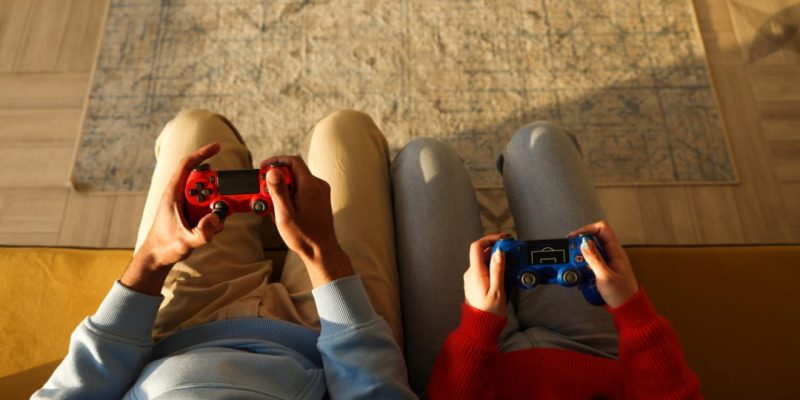
The input lag is the delay between the moment you press a button on your wireless controller and the moment that action is reflected in the game. This delay can affect your accuracy, especially in fast-paced or competitive games. Fortunately, several methods can reduce this annoying effect and improve the overall responsiveness of your gaming experience, whether you’re on a console, PC, or smartphone.
Optimize the wireless connection to limit lag
The main source of input lag in wireless often comes from the radio connection between the controller and the console or computer. Here’s how to improve this connection:
- Reduce the distance between the controller and the receiver (console or USB dongle) to minimize signal loss.
- Avoid physical obstacles like walls, metal furniture, or electronic devices that disrupt Bluetooth or radio waves.
- Prefer low-latency Bluetooth if your controller and device support it, as this protocol is designed to limit transmission delays.
- Disable Wi-Fi on the same frequency (2.4 GHz) when playing to avoid interference.
- Use a dedicated USB receiver rather than the built-in Bluetooth connection on some PCs, as the direct USB connection generally offers better stability and responsiveness.
Update the firmware of the controller and devices
Manufacturers regularly improve the performance and stability of wireless controllers through firmware updates. Installing these updates can:
- Fix bugs causing delays or connection losses.
- Optimize battery management and reduce interruptions.
- Improve synchronization between the controller and the device.
For PlayStation or Xbox consoles, simply connect the controller and start the update via the system menu. On PC, dedicated software like Xbox Accessories or Steam also allows managing these updates.
Adjust game and console settings
Some software settings can also influence overall input lag:
- Activate game mode on your screen or TV to reduce display latency, which decreases the time between the action on the controller and the displayed image.
- Disable image filters like post-processing, anti-aliasing, or V-Sync in the game’s graphic options to also reduce rendering delays.
- On PC, prefer a high refresh rate (120 Hz or more) and a resolution suited to your hardware to smooth the display.
- On console, avoid additional accessories or peripherals that could add extra processing to the signal.
Opt for a wired controller or a specific adapter
If wireless input lag remains a major issue, some hardware solutions can help:
- Connect the controller via USB to virtually eliminate any latency related to wireless transmission.
- Use a low-latency wireless adapter, like those designed by specialized brands, to improve the wireless connection compared to standard Bluetooth.
- For PC gamers, some third-party controllers integrate optimized communication protocols to minimize delays as much as possible.
Maintain the battery to avoid performance degradation
A poorly maintained battery can cause power drops in wireless transmission, leading to increased input lag. To preserve your controller’s responsiveness:
- Avoid playing when the battery is very low.
- Charge the controller with certified accessories to ensure stable charging.
- If the battery is removable, consider replacing it after several years of use.