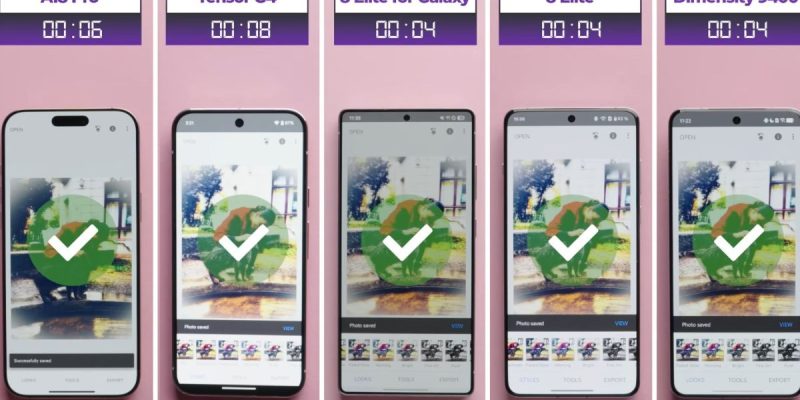
While high-end smartphones continue to impress with their power and innovations, the battle of chipsets is becoming fiercer than ever. The OnePlus 15R, equipped with the brand new Snapdragon 8 Gen 5, is set to compete directly with the Snapdragon 8 Elite processors found in Samsung and Xiaomi flagships.
This confrontation is not limited to performance figures. It reflects how manufacturers are striving to offer an experience that is fast, responsive, and capable of handling demanding applications, from mobile gaming to the heaviest multitasking uses.
With the Snapdragon 8 Gen 5, OnePlus aims to redefine the benchmark for mobile power, while offering optimized energy efficiency to extend the battery life of high-capacity batteries.
Snapdragon 8 Gen 5: what OnePlus brings to the table
The Snapdragon 8 Gen 5 is built on a 4 nm process, combining performance and controlled consumption. For the OnePlus 15R, it promises:
- High CPU frequencies, allowing multiple heavy applications to run simultaneously
- Latest generation Adreno GPU, optimized for 120 Hz mobile gaming and advanced 3D graphics
- Improved AI Engine, capable of handling voice recognition, computational photography, and augmented reality features
- Better thermal management, to prevent the phone from overheating during prolonged sessions
According to the first benchmarks published by specialized sources, the Snapdragon 8 Gen 5 would offer 5 to 10% more performance in multitasking compared to the Snapdragon 8 Elite, with slightly lower energy consumption in intensive scenarios.
Snapdragon 8 Elite: what Samsung and Xiaomi already offer
The Samsung Galaxy S and Xiaomi 15 Series flagships are equipped with the Snapdragon 8 Elite, a proven high-end processor:
- Powerful and stable GPU, capable of handling the most demanding mobile games
- Optimization of daily applications, from video streaming to multitasking navigation
- Advanced cooling, with intelligent thermal management to maintain performance
Despite its efficiency, some analyses indicate that the Snapdragon 8 Elite quickly reaches its limits under maximum load, especially with demanding games or video editing applications. It is precisely in this area that the Snapdragon 8 Gen 5 could gain an advantage.
How does OnePlus 15R plan to stand out in the chipset war?
To compete with Samsung and Xiaomi, OnePlus is focusing on several areas:
- Software optimization: the OS and GPU engine are adjusted to fully exploit the capabilities of the Gen 5
- Battery and cooling: a larger battery and a redesigned dissipation system prevent prolonged performance drops
- High display frequency: the 120/144 Hz screen of the 15R is capable of exploiting the processor’s performance peaks without noticeable slowdown
By combining these elements, OnePlus seeks to offer a mobile gaming and productivity experience without compromise, even against the market leaders.
Tests and benchmarks: first indications
The first measurements show that the Snapdragon 8 Gen 5:
- slightly surpasses the Snapdragon 8 Elite in multi-core CPU performance
- displays a more stable GPU management on demanding games, with fewer framerate variations
- maintains a lower temperature during prolonged gaming sessions, reducing the risk of throttling
These indicators suggest that the OnePlus 15R could hold its own against Samsung and Xiaomi models, offering increased responsiveness and a more sustained graphical experience.
What this competition means for the consumer
For users, this confrontation between Snapdragon 8 Gen 5 and 8 Elite presents several consequences:
- More power available for heavy applications: video editing, mobile gaming, and augmented reality
- Improved multitasking experience: quick switching between applications and smooth data processing
- Better optimized autonomy: the Gen 5 combines performance and energy management to extend battery life over a full day
- More stable gaming experience: fewer framerate drops, even in the most demanding titles
In short, the consumer could benefit from performance comparable or superior to Samsung and Xiaomi flagships, with the promise of a more consistent mobile experience.
The stakes for manufacturers and the industry
This chipset battle is not just about end users:
- OnePlus seeks to regain a position in the high-end segment, showing that it can compete with Samsung and Xiaomi on raw power
- Samsung and Xiaomi must maintain their lead by optimizing their 8 Elite to not lose ground to an effective challenger
- Processor innovation becomes a central marketing argument, influencing consumer purchasing decisions that closely follow specialized benchmarks and tests
This competition could also accelerate the adoption of new CPU and GPU technologies, with higher performance and better autonomy for all premium smartphones.