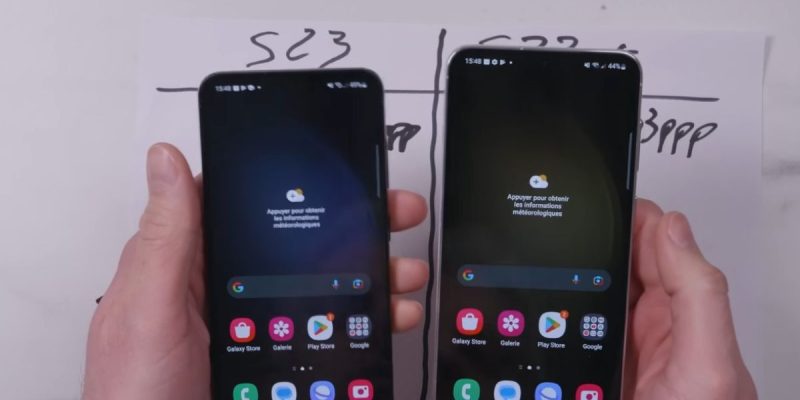
Since the installation of the June patch on One UI 6.1, several Samsung Galaxy S23 users have noticed an unusual change in RAM management. After this update, a portion of the RAM useful for applications seems reduced, which can affect smoothness during multitasking, the responsiveness of background apps, and the overall behavior of the smartphone.
What is really happening with RAM management on your S23?
After the installation of the June patch, several Galaxy S23 owners noticed that a portion of the RAM is now reserved for system processes more aggressively than before. In other words, a portion of RAM is less available for visible applications, which can give the impression of a smartphone becoming “saturated” more quickly when multiple apps are open.
On diagnostic tools, measurements often show a 10 to 15% decrease in usable RAM for apps compared to the previous version of One UI 6.1. For example, where an S23 under the previous version could display about 6.5 to 6.8 GB usable, some devices now show 5.8 to 6.0 GB accessible on average in the user environment.
This change is not recognized as an official hardware limitation by Samsung, but rather as a different allocation of RAM by the system after the software update.
When you open multiple applications, you notice the difference
This type of increased memory reservation is especially noticeable when you quickly switch between many applications. Where previously several apps could remain active in the background without being relaunched upon return, some users now observe more frequent reloads, indicating that Android frees up memory by closing processes.
In a typical multitasking scenario with half a dozen open applications (browser, messaging, music streaming, social networks), community tests show that the system frees up background memory faster. This means that some apps need to restart when you return to them, instead of resuming instantly, which can affect the feeling of overall responsiveness.
Why this change may be related to the overall system stability?
Samsung has not officially explained what motivates this new RAM management. However, a hypothesis shared by several Android specialists is that a portion of the memory is now reserved upfront for priority system services or thermal protections, to avoid unstable behavior under certain sustained usage conditions.
This could be a response to crashes reported after prolonged charging or intensive multitasking, where the system would have prioritized stability at the expense of free memory for applications. Nevertheless, this reallocation results in reduced availability for third-party apps, which some users interpret as an artificial limitation.