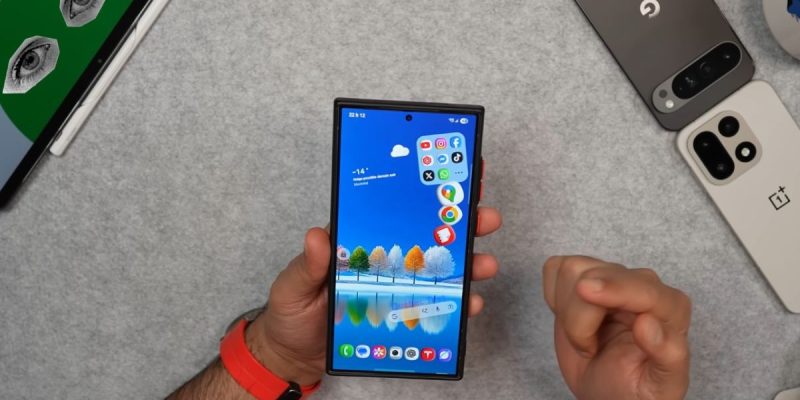
OnePlus smartphones equipped with 120 Hz screens offer impressive smoothness for scrolling and gaming. However, behind this smoothness lies an often overlooked element: LTPO (Low-Temperature Polycrystalline Oxide) technology, which dynamically adjusts the refresh rate to save battery.
The LTPO frequency that remains active even with minimal use to limit battery fatigue
On OnePlus 120 Hz screens, LTPO technology automatically adjusts the frequency between 120 Hz and a minimum value depending on the graphical load and brightness. This minimum frequency is not just theoretical: it remains active to maintain a smooth visual experience while reducing consumption.
Tests on OnePlus 9 Pro and OnePlus 10 show that the LTPO frequency rarely drops below 1 Hz in full standby, but stabilizes around 10 to 30 Hz when the screen remains on static or low-dynamic content. This value ensures that interface animations remain responsive while limiting energy consumption and heat production. It also explains why users report better-than-expected battery life despite the 120 Hz screen.
Why is the minimum LTPO frequency not always equivalent to the announced one?
OnePlus generally indicates that LTPO technology allows reducing the frequency to 1 Hz, but in practice, the active minimum frequency varies according to several parameters. The firmware, screen brightness, thermal management, and battery charge influence the actual value.
For example, during prolonged reading sessions or displaying fixed content, the frequency never drops below 10 Hz, to prevent flickering effects and ensure correct touch responsiveness. This nuance explains why some tests measuring energy consumption or smoothness show values slightly higher than those communicated by the manufacturer.
The combined effect of LTPO and displayed content on battery life and smoothness
The minimum LTPO frequency is also modulated by the type of content displayed. Videos, light animations, and dynamic interfaces prevent the SoC from completely reducing the frequency, even if the scene is generally static. On OnePlus 120 Hz screens, this modulation prevents a choppy rendering or a noticeable lag in scrolling.
Measurements reveal that an overly aggressive frequency drop on dynamic content can cause a perception of lag, while a frequency that is too high unnecessarily increases consumption. LTPO finely adjusts the minimum value to find the optimal compromise between smoothness and battery life, which explains the success of this technology on high-end OnePlus screens.
How to monitor and optimize LTPO frequency for a balanced experience?
Advanced users can check the actual frequency via integrated diagnostic tools or specialized applications. This allows them to see that the active minimum frequency often exceeds theoretical figures but remains sufficient to maintain a smooth experience.
To optimize battery life without sacrificing responsiveness, it is recommended to keep the LTPO option enabled, limit excessive brightness, and disable animated backgrounds when not necessary. On OnePlus devices equipped with 120 Hz, this approach allows maintaining perceptible smoothness while reducing consumption by up to 20% over a full day, according to field measurements.