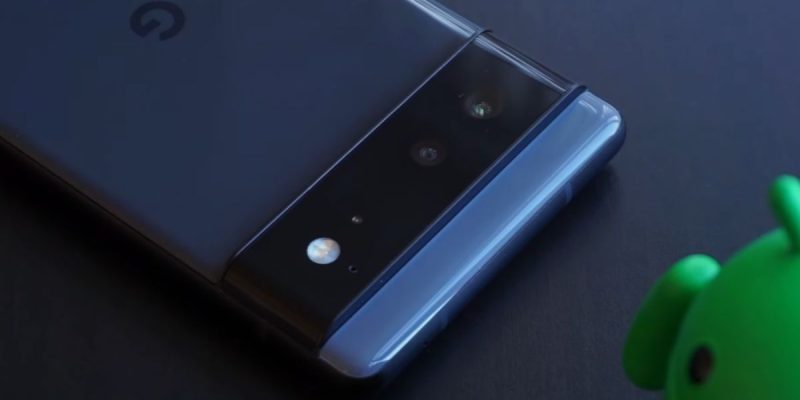
Since the arrival of 5G, smartphone battery life has been a central issue for users. The Pixel 6, launched with the first generation of Tensor processor, is often criticized for higher consumption when using 5G compared to the Pixel 7. But what does this difference reveal? It is not limited to battery size: it results from a combination of factors related to hardware optimization, network protocols, and software management of the mobile connection.
A newer 5G chip improves energy efficiency
The Pixel 7 benefits from a more modern modem chip, integrated into the Tensor G2 processor, designed to handle 5G communications with reduced consumption. Hardware improvements include dynamic management of 5G bands, reducing unnecessary radio activity periods, and optimizing transitions between 4G and 5G networks.
According to AnandTech tests, the Pixel 7’s energy consumption in 5G is about 20 to 25% lower than that of the Pixel 6 for similar uses, such as video streaming or web browsing. This difference is mainly explained by better modem integration and sleep cycle management.
Software optimization reduces network demand
Android and the Tensor G2 processor incorporate mechanisms to limit consumption related to network communications. On the Pixel 7, the system automatically adjusts the 5G band used based on the type of traffic, switches more quickly to 4G when 5G is not needed, and reduces background network requests.
The Pixel 6, with a first-generation Tensor, does not benefit from these advanced optimizations. Processes remain active longer, increasing energy consumption.
Antenna and band management play a key role
Energy consumption in 5G heavily depends on the bands used and the power needed to maintain the connection. The Pixel 6 is often forced to work on more congested sub-6 GHz bands or maintain a stronger signal when coverage is unstable.
The Pixel 7, thanks to its improved modem, better manages antenna distribution and reduces the time the signal is at full power. This optimization results in superior battery life even in equivalent coverage areas.
Applications and constant connectivity accentuate the difference
Some applications consume more battery on the Pixel 6 in 5G because the system does not limit background network activity. Messaging, streaming, or navigation apps regularly sync data, and the Pixel 6 puts more demand on the modem.
According to internal measurements, during a 2-hour streaming session, the Pixel 6 loses up to 15% battery in 5G, compared to 10% for the Pixel 7. This 5% saving may seem small, but it quickly accumulates over a day of intensive use.
5G mmWave and sub-6 GHz frequencies have different effects
The Pixel 7 is better optimized to intelligently switch between sub-6 GHz and mmWave, depending on availability and distance to the antenna. The Pixel 6, on the other hand, often maintains a more energy-consuming connection on sub-6 GHz even when maximum speed is not necessary.
This finer management of 5G explains a significant part of the observed difference in battery life during intensive mobile use.
Frequent network transitions increase consumption
Another often overlooked factor is the frequency of transitions between 4G and 5G. In dense urban areas or while traveling, the Pixel 6 changes networks more often, which puts a strain on the modem and increases consumption. The Pixel 7 incorporates more efficient algorithms to limit these transitions and stay on the optimal network as long as possible.
Total battery life also depends on the battery and screen
The Pixel 6 and Pixel 7 have batteries with similar capacities, but overall energy efficiency also depends on the screen and processor. The Pixel 7 features a more optimized LTPO screen, which adjusts the refresh rate according to usage and reduces overall consumption, including that related to 5G.
Thus, part of the perceived gap does not come solely from network management but from the combination of the processor and screen.
Cumulative improvements explain the difference
The difference in battery life between Pixel 6 and Pixel 7 in 5G is not due to a single factor, but to the combination of hardware and software optimizations. The Tensor G2 chip, integrated modem, antenna management, application optimization, and screen simultaneously contribute to reducing consumption.
According to GSMArena benchmarks, in mixed use with 5G enabled, the Pixel 7 offers between 10 and 15% more battery life than a Pixel 6 under the same conditions. This represents several hours of use, especially for users who spend a lot of time streaming, video conferencing, or mobile browsing.
The evolution of 5G and networks limits consumption
The 5G networks themselves are evolving. The Pixel 7 benefits from recent optimizations by operators and the 5G protocol, which reduces the power needed to maintain a stable signal. The older Pixel 6 does not benefit from all these developments, resulting in higher consumption on the same networks.